


📌 Quick Overview
A UC Berkeley study estimated that people swallow about 24 mg of lip product a day, and up to 87 mg a day if you reapply a lot. Many popular lip products contain synthetic polymers, which are basically plastics, and one of the most common is polybutene. The case that it’s safe to swallow comes from decades-old studies in rats and dogs, and there are no long-term studies in people. That’s a big reason I switched my everyday lip product to 100% pure lanolin.
Why Are We So Addicted To Lip Products?
Why are we like this? So many of us have to have something on our lips all day long, whether it’s chapstick, a lip balm, a gloss, or a lip sleeping mask. We never want to be without it.
I was born in the 80s, and back then chapstick was pretty much all we had. I still see my dad pull one out of his pocket. Now it’s lip masks and glosses and tinted balms, and a lot of us reapply every hour, or every 30 minutes, or even more often than that.
So where is it all going?
You’re Eating Your Lip Product
If you think about it, you’re eating it. It comes off when you eat and drink, and when you lick your lips without even noticing.
Researchers at UC Berkeley estimated that the average person swallows about 24 mg of lip product a day. For heavy users who reapply a lot, it can be as much as 87 mg a day[1]. That’s a small amount each time, but it adds up to a steady dose of whatever is in your formula, every single day, for years.
That’s why I think the product you reapply all day matters a lot more than a lipstick you wear once a week.
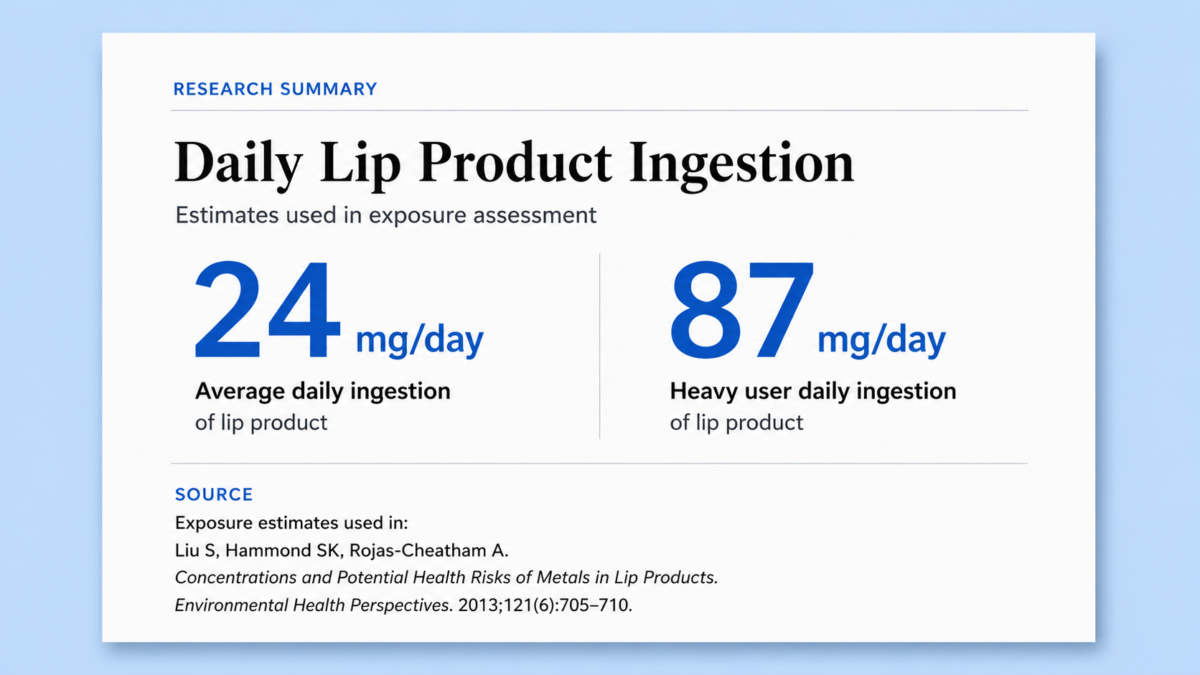
Daily lip product ingestion estimates – 24 mg/day average, 87 mg/day heavy users (Liu et al., Environmental Health Perspectives, 2013).
The Plastic In Popular Lip Products
I used to love the Laneige Lip Sleeping Mask. A lot of people swear by it, and honestly, I get it. It feels great.
On their website, the key ingredients they highlight are coconut oil, murumuru butter, shea butter, and vitamin C. But, when you look at the full ingredient list, it starts somewhere else. The first ingredient is a synthetic emollient, which is a lab-made ingredient that makes the product feel silky and look glossy. The next few are mostly more synthetic emollients and petroleum-based ingredients.
Then you get to polybutene.
Polybutene is a synthetic polymer, which means it’s made of long chains of repeating molecules. In other words, it’s a liquid plastic. The same type of material is used in adhesives and industrial lubricants. In lip products, it’s there to add shine and help the product stick to your lips. According to the cosmetic safety panel’s own report, it can make up more than 80% of some lipsticks[3].
<
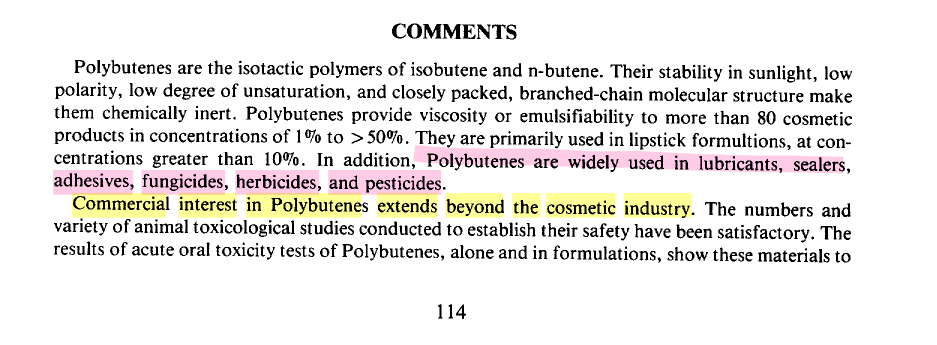
The original 1982 report also notes polybutenes are used in lipsticks at concentrations greater than 10%, and they’re also widely used in lubricants, sealers, adhesives, fungicides, herbicides, and pesticides[2].
/vc_column_text]
What The Safety Testing Is Based On
The industry will tell you that polybutene has been reviewed and considered safe by a cosmetic safety panel, and technically, that’s true. The panel knew lip products get swallowed, so they looked at feeding studies.
Here’s what those studies were. Rats were fed polybutene in their food for two years, and beagle dogs were given it daily for two years. In the highest dose group, six male rats died partway through the study, and three of them had blood in their urine. Two had clotted blood in their urinary tract, bladder, stomach, and intestines. The panel said it didn’t find any changes it could link to polybutene. To be fair, the dogs didn’t show any problems[2].

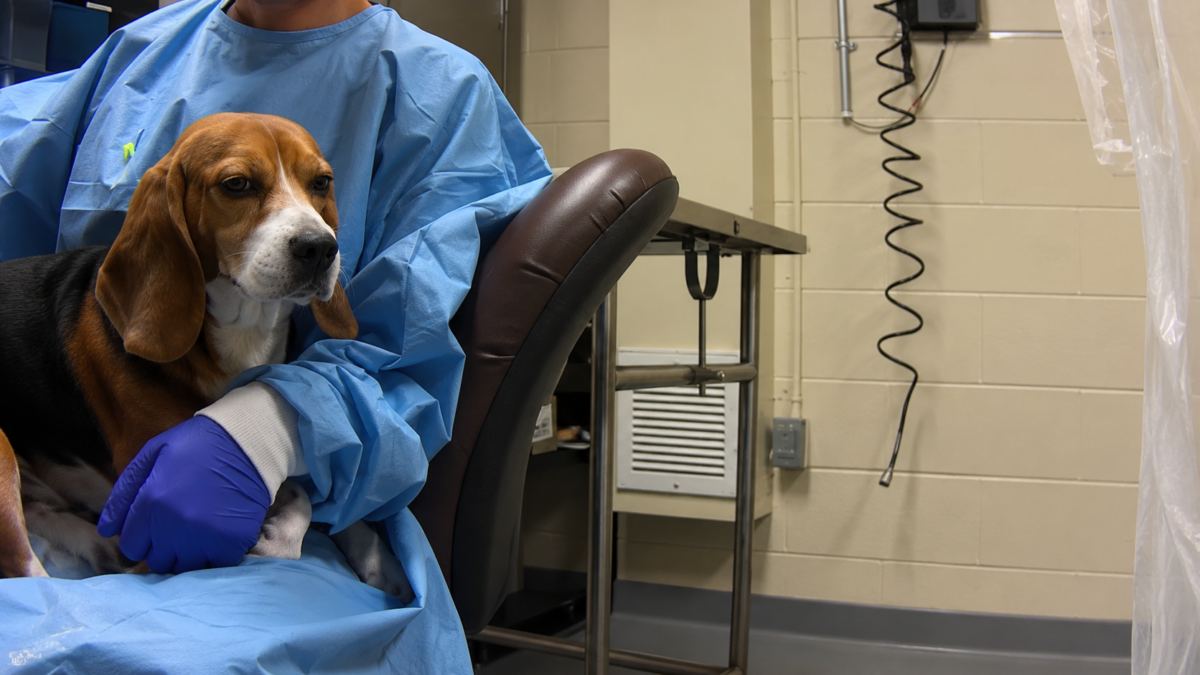
Beagles are still commonly used in lab safety testing. (Photo is not from the polybutene study.)
You can decide what you think about that. Personally, I find it pretty disturbing.
These are decades-old animal studies, and rats and dogs don’t process things the same way we do. There are no long-term studies on people swallowing this plastic off their lips every day for years. None. So the whole case for eating it rests on what happened to rats and beagles in a lab a long time ago.
And this is just one ingredient. Most people have no idea what the story is behind the ingredients they use every day.
How To Spot Plastic On A Lip Product Label
If you want to check your own lip products, these are some of the synthetic polymers to look for on the ingredient list:
- ❌ Polybutene
- ❌ Polyisobutene or hydrogenated polyisobutene
- ❌ Polyethylene
- ❌ Nylon-12
- ❌ Acrylates copolymer (or anything ending in “copolymer” or “crosspolymer”)
If you’re also trying to avoid silicones, watch for anything ending in “-cone” or “-siloxane,” like dimethicone.
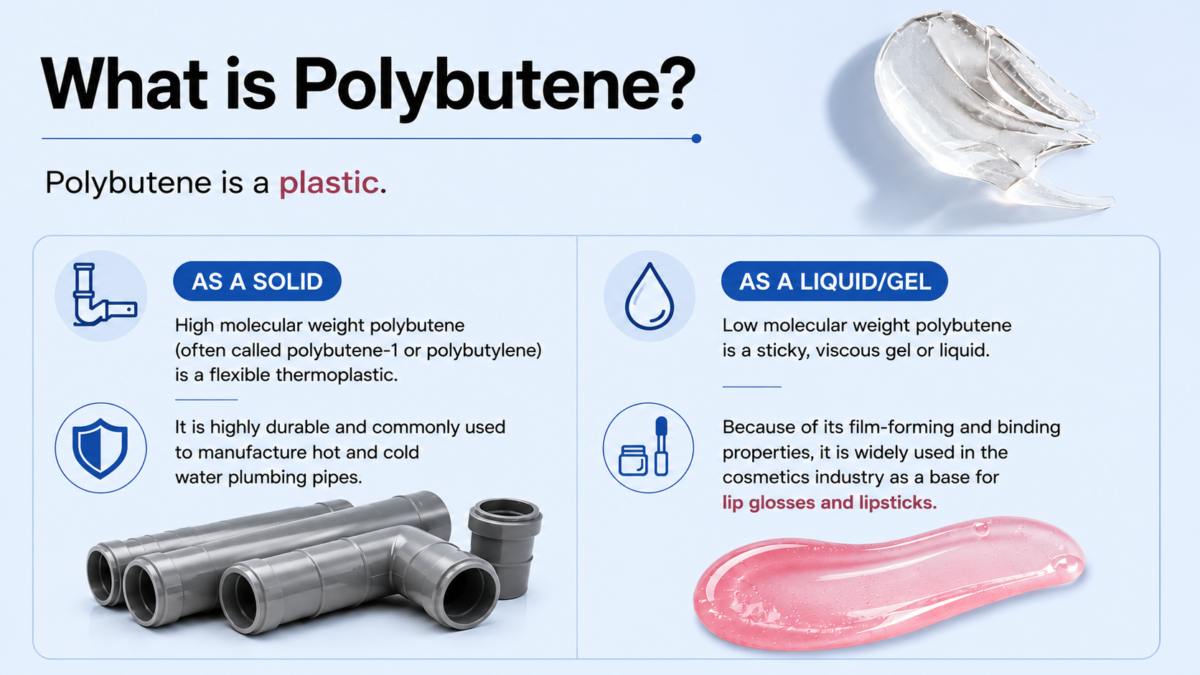
The solid polybutene in pipes is a related but different form. Lip products use the liquid form.
Why I Care So Much About This
Microplastics are the big one for me. Over the last year, it’s really started to bother me how much plastic is in our lives, and I’m sick of it. It’s in our clothes, our fluffy polyester blankets, even the lint in our dryers.
I’m not a purist, and I’m not trying to be perfect. There are things I wear and use every day that I’m sure contain some of these ingredients, and it’s getting harder and harder to find products without them. But, the product you’re swallowing all day long is the first one I’d change.
This post may contain affiliate links & I will earn a small commission if you purchase through them.
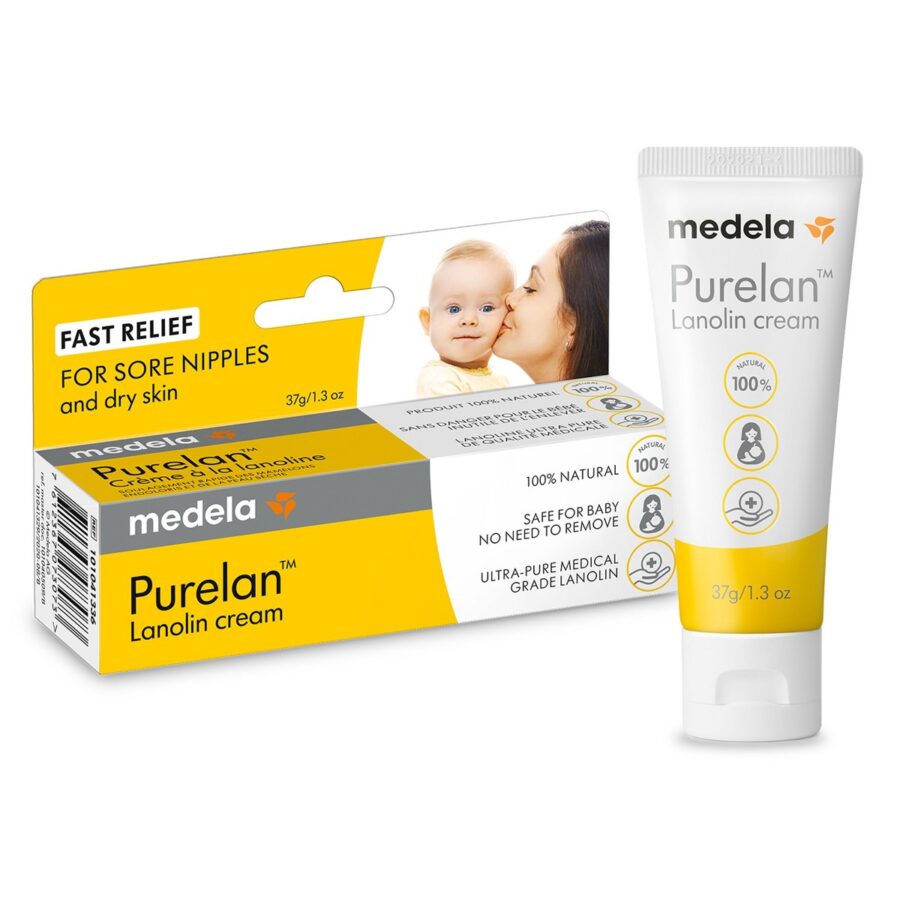
Why I Switched To 100% Pure Lanolin
The main product I use on my lips now is 100% pure lanolin – Medela Purelan (100% pure lanolin cream). I like the tube, which holds 1.3 oz (37g). I’ve bought lanolin in a big tub before and it was cheaper, but you have to dig your fingers into it, and that introduces bacteria over time.
If you haven’t heard of it, lanolin is a natural waxy substance that comes from sheep’s wool. It’s collected after the sheep are sheared, so the sheep aren’t harmed. Purelan is just that one ingredient – no extras It’s been used for a long time, and nursing mothers commonly use it on sore, cracked skin.
What I love most is how long it stays on my lips. It’s thick and really moisturizing, and it soaks in instead of just sitting on top like a film. So, I don’t have to reapply it nearly as often as I did with chapstick or my lip mask. The tube usually costs somewhere around $7 to $12 depending on where you buy it and the day (prices change), and one tube lasts me a long time.
I’ll be honest though, I didn’t like it at first. The texture felt way too thick and I didn’t love how it felt. But, I didn’t have anything else I wanted to use, so I stuck with it. I’m so glad I did, because it grew on me, and now I love how my lips look and feel.
I know some people think a waxy substance from sheep’s wool sounds gross. I’d still rather use that than a crude oil-based product on my mouth. That’s just me, and everybody’s different. Also, some people are sensitive or allergic to lanolin, so if you’re not sure, try a little on a small area first.
A while back, I also made my own lip balm in a little glass jar with mostly lanolin, a bit of beef tallow, a little avocado oil, and beeswax. It was a really nice formula, similar to a lip sleeping mask but thicker. I haven’t made it in a long time, but if you’re interested, let me know in the comments and I’ll recreate it and share the recipe.
The Lanolin Blend That Didn’t Work For Me
I also tried Mommy’s Bliss nipple balm, which is made with lanolin, shea butter, and coconut oil. I thought it would be a good option if you don’t like how thick pure lanolin is. It is smoother, but I had to reapply it way more often.
I also started getting tiny pimples around my mouth, which is really rare for me. I believe it was from this balm. I’ve used coconut oil on my skin before without any problems, so it may have been the shea butter, but I’m not sure. Either way, I went right back to pure lanolin.
And yes, I know these are both sold as nipple creams. I’m past the age of caring about that!
Final Thoughts
I’m not trying to scare anyone. I just think it’s worth knowing what’s in the product you’re putting on your lips, and swallowing, all day long. For me, switching my everyday lip product to pure lanolin was an easy change, and I haven’t looked back.
I’m also working on a separate post about the cleanest lip color products I’ve tried, including which ones were great and which ones I wouldn’t buy again.
What do you use on your lips every day? Have you ever checked the ingredient list? Let me know in the comments.
Sources
- Liu S, Hammond SK, Rojas-Cheatham A. Concentrations and Potential Health Risks of Metals in Lip Products. Environmental Health Perspectives. 2013;121(6):705–710. DOI: 10.1289/ehp.1205518. (Source for the 24 mg/day and 87 mg/day ingestion estimates.)
- Final Report on the Safety Assessment of Polybutene. Journal of the American College of Toxicology. 1982. DOI: 10.3109/10915818209021264. (Rat and beagle feeding studies; uses in lubricants, adhesives, pesticides.)
- Cosmetic Ingredient Review. Safety Assessment of Polyene Group as Used in Cosmetics. Final Report, 2015. CIR final PDF. (Updated review; lists polybutene at up to 82.4% in lipsticks.)

