Note: I’ve Reached Out to Native and P&G
I’ve sent a media inquiry to P&G’s communications team requesting comment on this reformulation. I’d like to know when the change took effect, why customers weren’t notified, and how Native reconciles the “new and improved” marketing with a formula that moves from largely natural to largely synthetic ingredients. If I receive a response, I’ll update this post with their statement.
The last truly great microplastic-free affordable mineral sunscreen on the drugstore shelf is being discontinued.
Back in November I did a little investigation on microplastics in mineral sunscreen and I wrote a post and did a video on it. After going through ingredient lists from Korean, U.S., and luxury brands, I found that almost all of them contained synthetic polymers that fall under the EU definition of microplastics. Only two products passed my criteria for being affordable, smooth, wearable, and genuinely free of microplastics. Native’s Unscented Mineral Sunscreen SPF 30 was one of them.
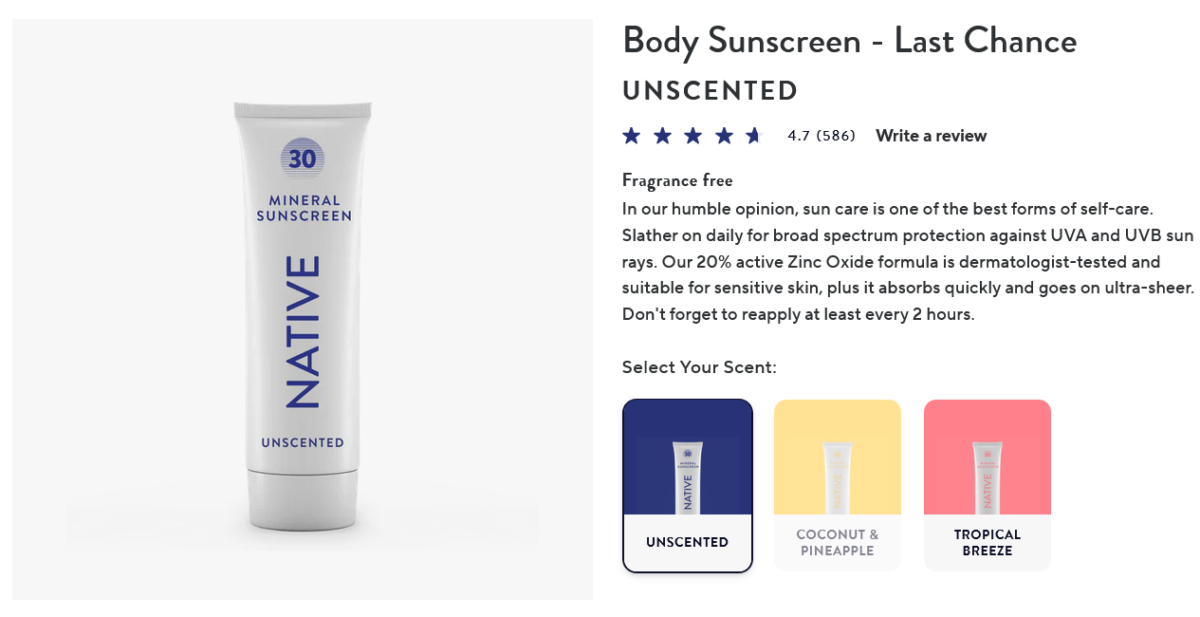
Native is now phasing it out and replacing it with a reformulated version they’re marketing as “new and improved.” After comparing the two formulas side by side, the new one is a real downgrade in my opinion – lower zinc oxide, polyacrylamide (a synthetic polymer flagged as a microplastic), petroleum-derived hydrocarbons, and the plant oils stripped out. It’s essentially going form a product that was mostly natural to now mostly synthetic.
I’m genuinely disappointed about this. Native was the rare drugstore option that I loved and recommended to many people. The fact that one of the only two products that passed my microplastic test is being replaced with a worse formula is extremely frustrating. There are products out there that don’t contain microplastics, but the products are not wearable and leave a chalky white paste on your skin. Native had such a great product, but unfortunately they’re replacing it with a lower quality one, in my opinion. I’m highly considering starting my own skincare line with clean ingredients.
What Actually Changed
Here’s what stood out when I compared them.
Zinc Oxide
The zinc oxide dropped from 20% to 17%. That’s the active ingredient that does the actual sun protecting, and they reduced it.
Change to Synthetic Emulsifiers
The coconut-derived emulsifiers were replaced with synthetic ones. Coco-glucoside, arachidyl glucoside, and coco-caprylate were swapped out for steareth-21, steareth-2, and laureth-7. Those are PEG-style ethoxylated surfactants that can be contaminated with 1,4-dioxane during manufacturing, and they’re a step away from the gentler plant-based alternatives in the original formula.
Oils Removed
The plant oils are gone. The old formula had avocado oil, sunflower seed oil, and vitamin E. The new one has none of those.
Petroleum Products Replacing Coconut Alkanes
Coconut alkanes were replaced with isohexadecane and C13-14 isoalkane. Those are petroleum-derived hydrocarbons. The old version was getting that texture from coconut. The new one is getting it from petroleum.
Microplastics Added
Polyacrylamide was added. This is the one I want you to pay attention to if microplastic-free is your priority. Polyacrylamide is a synthetic acrylamide polymer – a plastic-derived ingredient.
Silicone Added
Triethoxycaprylylsilane was added. This is a silicone. Not a microplastic by the strict definition, but another synthetic that wasn’t in the original.
From Natural to Synthetic
The old formula was almost entirely built around naturally-derived ingredients – coconut, plant-based fatty alcohols, fermentation-derived xanthan gum, plant oils, vitamin E. The new formula is largely synthetic – PEG-style surfactants, petroleum-derived hydrocarbons, a synthetic acrylamide polymer, and a silicone. It seems like they rebuilt it from a completely different chemistry approach.
The Old Formula vs. The New Formula
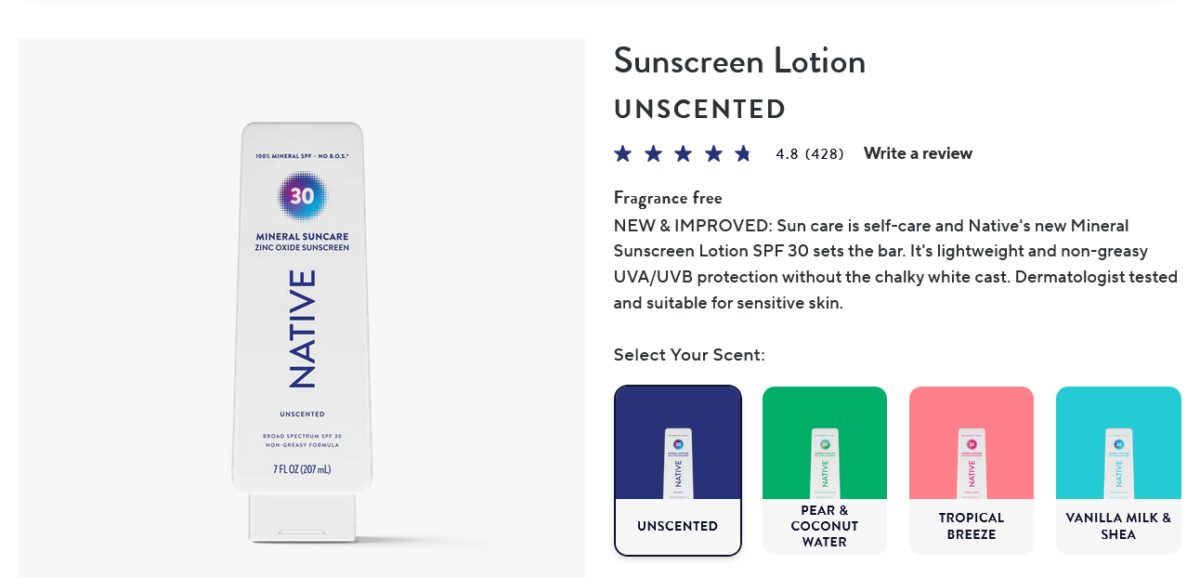
The differences aren’t subtle. Here are the ingredient lists side by side so you can see for yourself.
Old Formula (being phased out)
Active: 20% Zinc Oxide
Inactive: Water, Caprylic/Capric Triglyceride, Coconut Alkanes, Glycerin, Cetearyl Alcohol, Coco-Glucoside, Arachidyl Alcohol, Behenyl Alcohol, Arachidyl Glucoside, Polyhydroxystearic Acid, Benzyl Alcohol, Xanthan Gum, Coco-Caprylate/Caprate, Tocopherol (Vitamin E), Avocado Oil, Sunflower Seed Oil.
New Reformulated Formula (current product)
Active: 17% Zinc Oxide
Inactive: Water, Caprylic/Capric Triglyceride, Isohexadecane, Glycerin, Steareth-21, Polyhydroxystearic Acid, C13-14 Isoalkane, Steareth-2, Laureth-7, Stearyl Alcohol, Behenyl Alcohol, Cetyl Alcohol, Polyacrylamide, Triethoxycaprylylsilane, and Benzyl Alcohol.
Why This Matters for Microplastic-Free Skincare
When I recommend a sunscreen as microplastic-free, I’m specifically looking for formulas without synthetic acrylates, polyacrylamides, polymethyl methacrylate, dimethicone crosspolymers, and similar plastic-derived ingredients.
The old Native formula was one of the very few drugstore-priced options that genuinely avoided this category of ingredient. You could grab it at Target for around $15 or $20 and trust the formula. With polyacrylamide now in the new version, that’s no longer true.
Stock Up on the Old Formula While You Can
Native is currently selling the original formula on their site under a “Last Chance” listing. If you’ve been using it and loving it, this is the time to grab a few tubes before they’re gone for good. I bought one extra to get me through.
You can find what’s left of the original formula on Native’s website here: https://www.nativecos.com/products/sunscreen-body-last-chance. The original is also still on Amazon too, and I just bought one extra one.
A Correction About Mad Hippie – Something I Didn’t Know Before
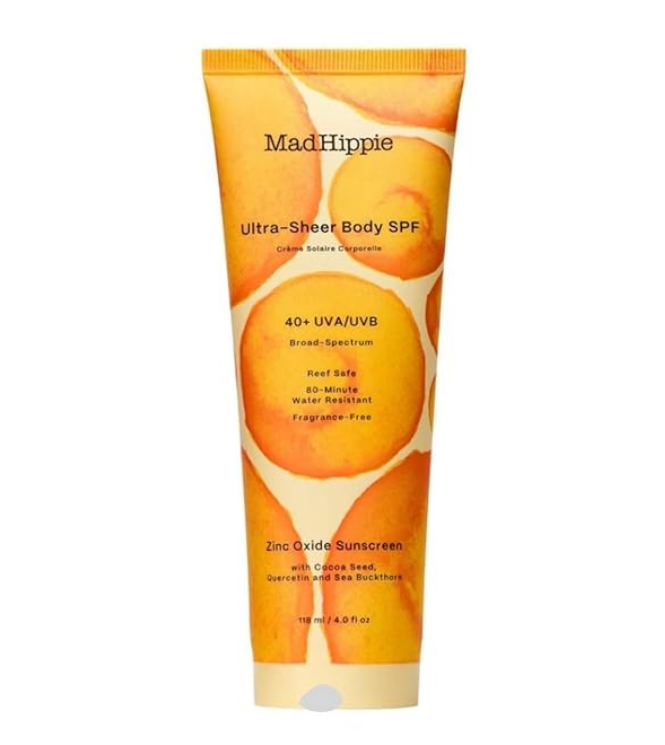
The other affordable mineral sunscreen I’ve recommended in the past is Mad Hippie’s Ultra-Sheer Body SPF 40. While digging into this whole situation, I learned something I didn’t know before – that it contains a chemical filter called butyloctyl salicylate, even though it is still labeled as a mineral SPF on the front of the bottle. But here’s what butyloctyl salicylate actually is and what it actually does.
What Butyloctyl Salicylate Is
Butyloctyl salicylate is a slightly modified version of octisalate, which is one of the regulated chemical UV filters used in chemical sunscreens. The chemical structure that does the UV absorbing is essentially the same. Cosmetic chemists who’ve looked into this call the practice “sunscreen doping.” Brands add butyloctyl salicylate to their mineral sunscreens for a few reasons.
- It boosts the SPF rating without the brand needing to use as much zinc oxide, which lets them market a thinner, less white-casting product.
- It’s not on the FDA’s regulated list of UV filters, so brands aren’t required to call it an “active ingredient” on the label. It can sit quietly in the inactive ingredient list while still doing chemical UV-filter work.
- It allows a product to keep the marketing claim of being 100% mineral or all mineral, even though a chemical UV filter is doing some of the protection.
The Concerns With Butyloctyl Salicylate
Butyloctyl salicylate only absorbs UVB rays, not UVA. So when it’s used to lower the zinc oxide percentage in a mineral sunscreen, the UVA protection actually goes down even though the SPF number on the box stays the same. SPF measures UVB protection. Long-term skin damage, pigmentation, and many forms of skin cancer come from UVA exposure. So a sunscreen with butyloctyl salicylate can read as SPF 40 on the label but actually offer less broad-spectrum protection than a pure zinc formula.
It absorbs through the skin the way other chemical UV filters do. Research suggests possible endocrine disruption, particularly concerning for pregnant women, nursing mothers, and children. The EWG flags it as having concerns around enhanced skin absorption, endocrine disruption, and contamination, and notes it cannot be used in their EWG Verified products without additional substantiation.
Because it’s a salicylate, there are also questions about its appropriateness during pregnancy. Salicylates can cross the placenta. Not all salicylates convert to salicylic acid when applied topically, but the overall salicylate category has long been a caution flag for pregnancy.
Read the Labels Carefully
Many brands are getting sketchier with sunscreen formulations across the board. I used to buy Good Molecules’ mineral sunscreen and they had a hidden chemical filter in it too. The pattern keeps repeating – a brand markets a product as 100% mineral or all mineral or natural, and then you read the inactive ingredient list and find a synthetic UV filter, a microplastic, or a petroleum hydrocarbon hiding there.
Always read the inactive ingredient list before buying a mineral sunscreen or other skincare product. The list of ones to watch for in a “mineral” sunscreen includes:
- Butyloctyl salicylate (modified octisalate, chemical UV filter)
- Tridecyl salicylate (also modified octisalate)
- Polyester-8 (modified octocrylene)
- Ethylhexyl methoxycrylene (related to octocrylene)
- Ethyl ferulate (similar function to octocrylene)
- Diethylhexyl syringylidenemalonate (similar to octinoxate)
If any of those are in a product calling itself 100% mineral, the brand is using a regulatory loophole. The FDA doesn’t restrict the percentage of these ingredients because they’re not classified as active UV filters in the US, even though they function the same way.