LED Face Masks Aren't All the Same: What a New Lab Study Found
University researchers measured the light coming out of four LED masks. Here’s what they found, why the colors on the box don’t tell you much, and what to check before you buy.

Some links in this post are affiliate links. I may earn a small commission at no extra cost to you.
On this page
Why I Wanted to Share This Study
I’ve been taking a closer look at LED masks lately, and they can be really hard to compare. They range from under $50 to over $1,000, and most of them make very similar promises. So when a group of university researchers in Spain put four masks under a lab instrument and measured the light actually coming out of them, it really got me interested.
The study was published in May 2026 in Photochemical & Photobiological Sciences. The researchers bought the masks with university funds and said they had no conflicts of interest, which is not something you see often with LED research.
Researchers measured four LED masks that cost about €13 to €200 (about $15 to $230 USD). None of the manuals listed how much light the masks actually put out. On two of the masks, some spots on the face got up to 40 times more light than others. And masks that list the same color can deliver very different amounts of light. The bottom line: the color on the box doesn’t tell you much on its own.
What the Researchers Found
The manuals left out the most important number: irradiance. Irradiance is how much light power actually reaches your skin, measured in milliwatts per square centimeter (mW/cm²). Think of it like the brightness setting on a lamp. Two lamps can both be “red,” but one might be much stronger than the other. The amount of light your skin gets in a session depends on that strength and how long you use the mask. None of the four masks listed their irradiance or how much light they put out at each wavelength. One manual even listed a “light blue” setting at 160 to 195 nm, which isn’t visible light at all. That range is UV-C, so it was almost certainly a typo, but it shows how little checking goes into some of these instruction booklets.
Your whole face may not be getting the same dose. On the two masks that rest right on the skin, the light changed a lot depending on where they measured. On one mask, the strongest spot got about 40 times more light than the weakest spot. To put that in perspective, in a 10-minute session, one part of your face could get the full 10 minutes’ worth of light while another part gets the equivalent of about 15 seconds. The other mask had about a 21-fold difference. Part of the reason is spacing: the LEDs were anywhere from about half a centimeter to 3 cm apart, and how well a mask sits on your face depends on your face shape.
Same color doesn’t mean same light. With similar session times, the total amount of light from one mask to the next differed by more than 10 times. In other words, one mask could give you more light in a single minute than another gives you in a full 10-minute session. The authors’ point was simple: two masks that both say “red” can’t be assumed to do the same thing.
One thing to keep in mind is that this was a small lab study of four mostly budget masks, and the researchers only measured visible light, not near-infrared. It doesn’t tell us which masks work on skin. What it does tell us is that the specs you see on the box can’t be taken at face value.
What This Means If You’re Shopping
That’s why it helps to look past the colors and ask a few more questions before buying:
- Does the brand publish irradiance? That’s the strength of the light reaching your skin, usually listed in mW/cm². A brand that shares it (and says how it was measured) is giving you more to go on than one that only lists colors.
- Are the wavelengths specific? Red around 630 to 660 nm, near-infrared around 830 to 850 nm and blue around 415 nm are the ones with the most research behind them. “Red light” with no number isn’t very helpful.
- How many LEDs, and how close together? More LEDs spaced closer together usually means more even coverage.
- Is there any testing on people? Even a small study, as long as it says who paid for it, is better than none.
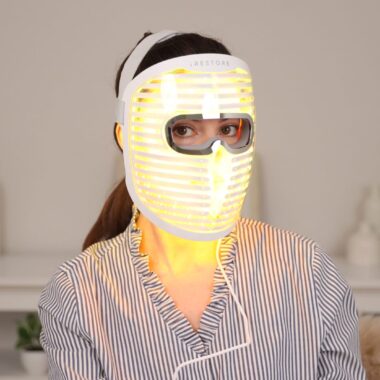
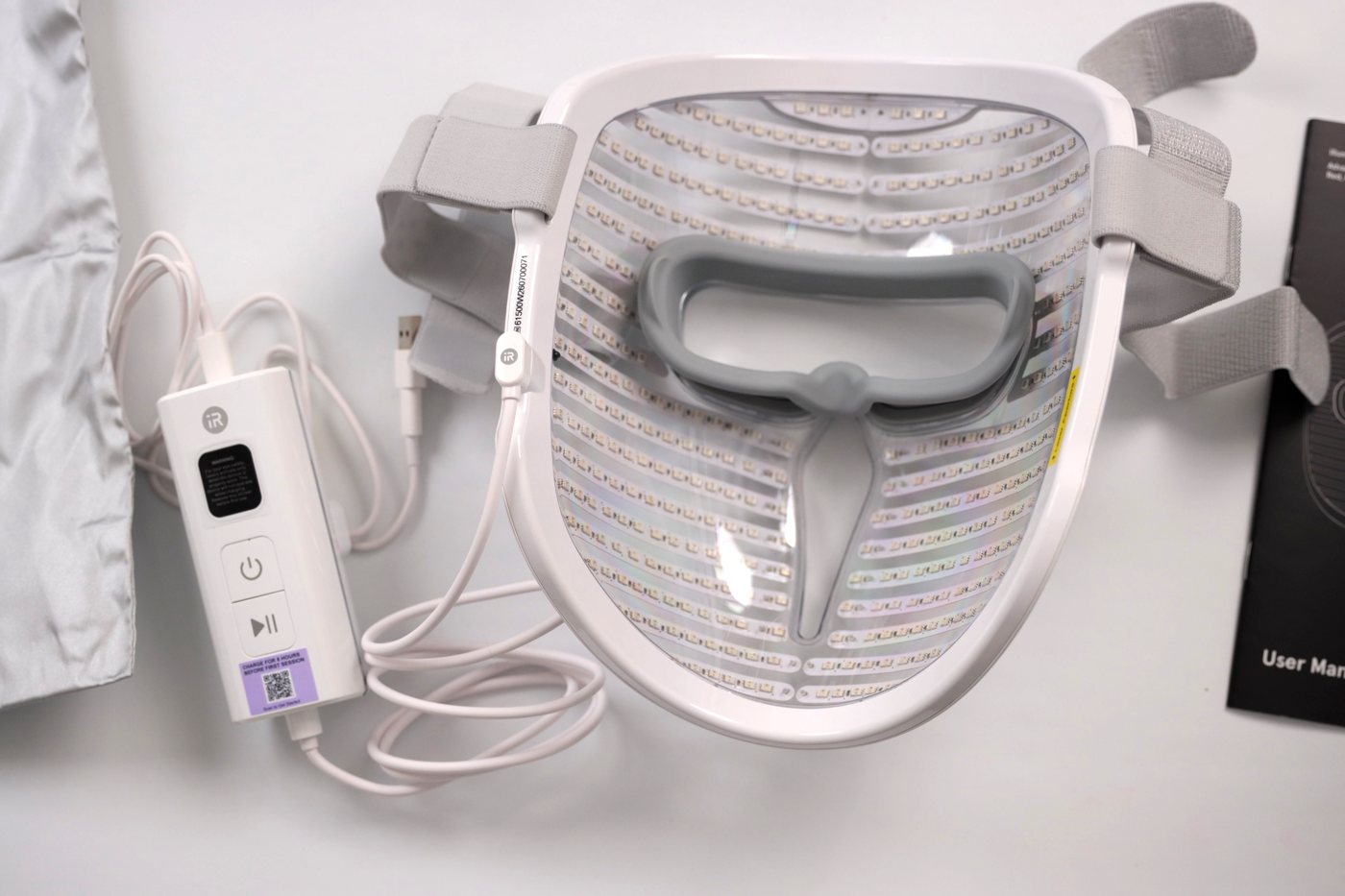
If you want to see how a higher-end mask handles this, I wrote a closer look at the iRestore Laser Face Mask Pro, including the wavelengths and power it lists.
A Quick Word About Your Eyes
Blue light is the setting to be most careful with. There’s a 2020 case report of a 37-year-old woman who developed retinal damage after using a blue LED face mask, and her vision improved after about four weeks. It’s one case, but it’s a good reminder. Keeping your eyes closed and using the eye protection that comes with your mask is a good idea. I’m personally extra careful about my eyes, so I’d rather be safe here. If you are too, you can also wear disposable adhesive eye shields made for laser, IPL and LED treatments. If you have an eye condition or take a medication that makes you sensitive to light, check with your doctor first.
Final Thoughts
This study is a big reason I pay so much attention to specs now. A mask can look great and list all the right colors, but if the brand won’t tell you how strong the light is, you really don’t know what you’re getting. That’s one of the things I like about iRestore: they list their wavelengths and their irradiance.
The main takeaway: the price tag and the colors on the box don’t tell you how much light you’re actually getting. If a brand is open about its numbers, that’s a really good sign, and if it isn’t, it’s fair to ask.
Do you check the specs before you buy a device, or do you go by reviews? Tell me in the comments!