I Was Diagnosed With H. Heilmannii Instead of H. Pylori – My Experience
I have never been on so many powerful medications at once in my entire life. You may have heard of H. Pylori, which is really common. But, I tested negative for that.
What I have is something called H. Heilmannii – a bacteria that is incredibly rare in western countries. The treatment is identical, but almost no one is talking about it, and there is barely any information out there from real people who have actually gone through it. So I wanted to share my experience.
📌 Quick Overview
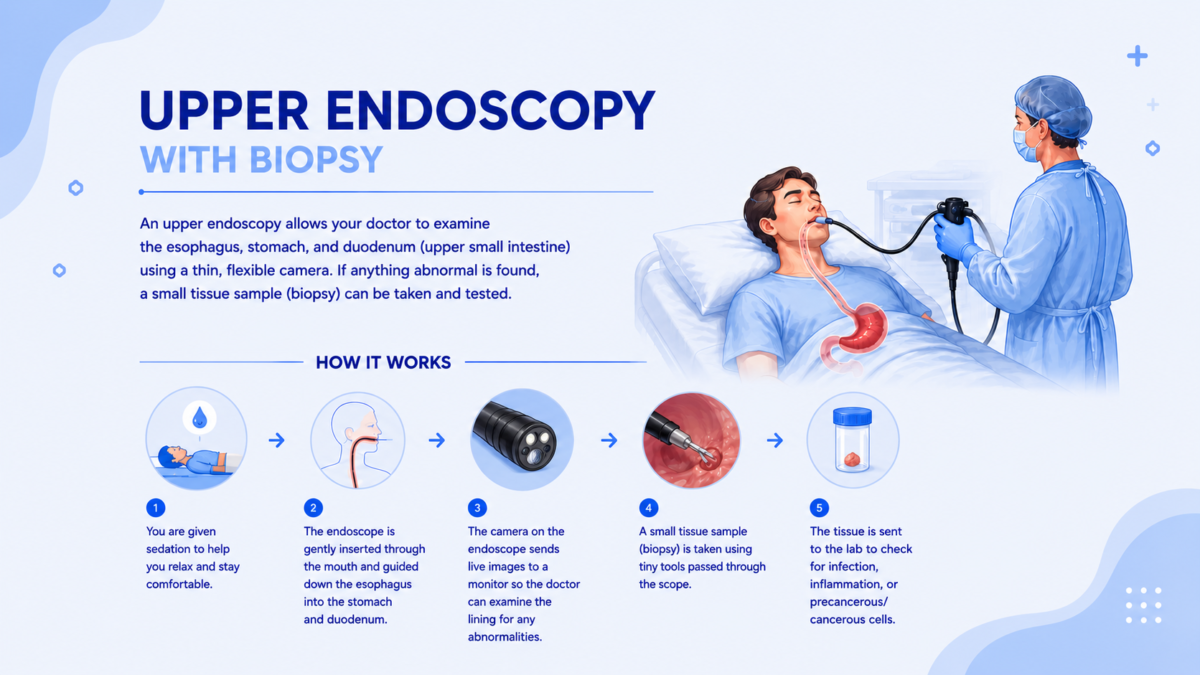
Recently I went in to have a colonoscopy, and the doctor recommended an upper endoscopy too. Biopsies are almost always done during the upper endoscopy, as the doctor is generally looking for something quite common, called H. Pylori. I’ve never tested positive for that, but my results came back positive for something called H. Heilmannii instead. It is extremely rare in the U.S., spread from animals to humans rather than person to person, and treated with the same medications (often called quadruple therapy) as H. Pylori. Below I share how I likely got it, my experiences, and what the treatment has actually been like – plus a really positive update two weeks out.
The Endoscopy I Almost Refused
Recently I had both a colonoscopy and an upper endoscopy. I almost said no to the upper endoscopy because it felt unnecessary at the time. There has been so much talk lately about young people getting colon cancer, and that is really what motivated me to finally get checked out, because the prep alone is enough to make anyone put it off.
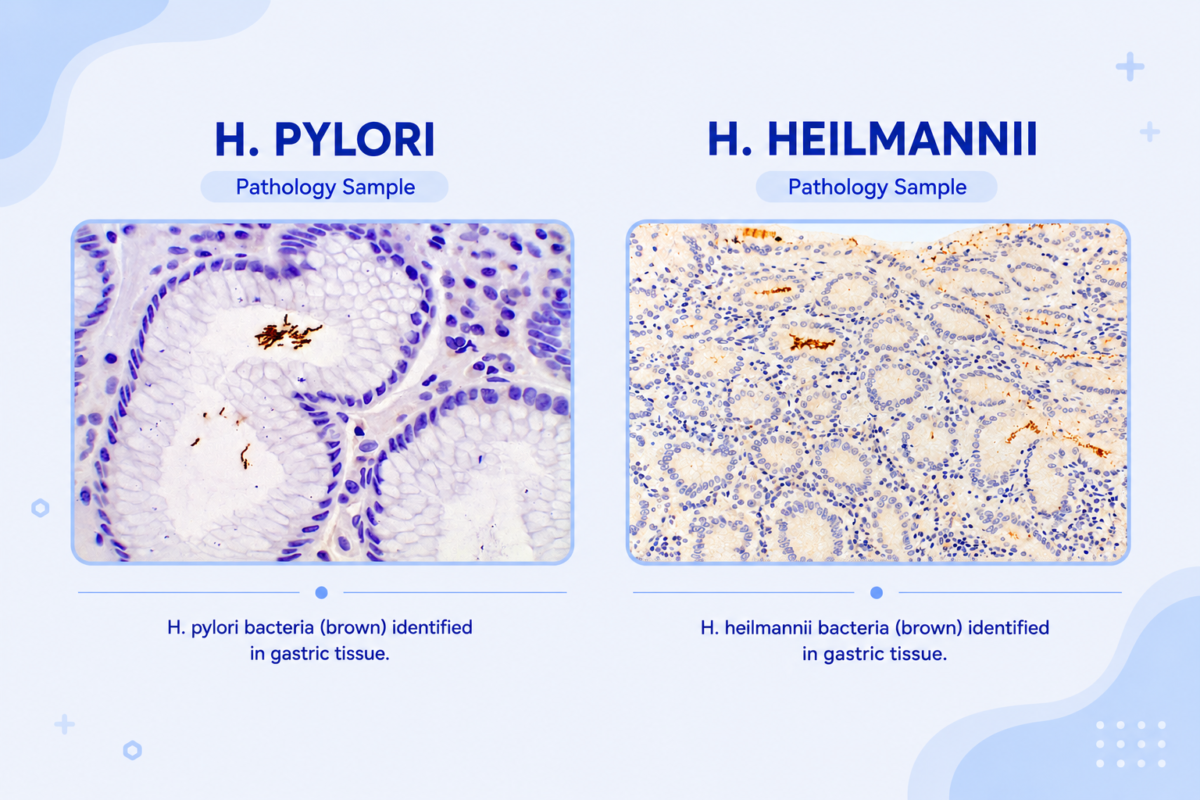
During the upper endoscopy they did biopsies. When the pathologist looked at the sample, he was checking for H. Pylori. He did not see that. He saw something else entirely.
What Is H. Heilmannii?
H. Heilmannii is almost like a cousin to H. Pylori. The two are different bacteria, but they cause similar stomach problems and are treated with the exact same protocol. Both have also been associated with stomach issues and, in some cases, stomach cancers if left untreated long term.
The big difference is how you get it. H. Pylori is easily passed between humans through saliva and close contact, and a lot of people pick it up in childhood from family members. H. Heilmannii is different – it is spread from animals to humans, from dogs, cats, and pigs to humans. That detail ended up being a huge clue for me.
How I Think I Got It – Thailand
I spent a month in Thailand exactly one year ago. The place I stayed at in southern Thailand had cats roaming everywhere. Since this bacteria spreads from animals to humans, that was the very first thing I thought of.
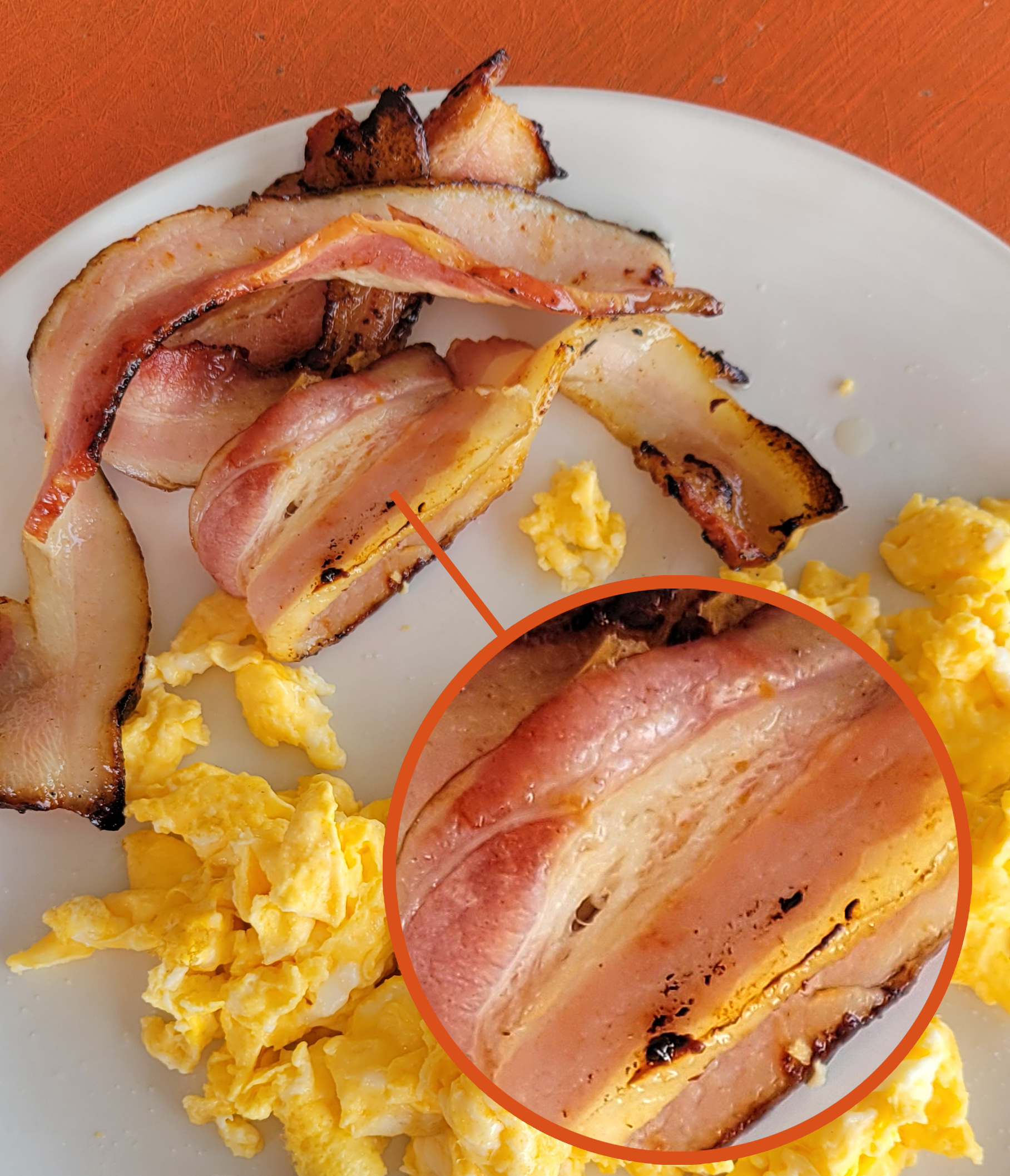
But the bigger suspect was breakfast. Every single morning I ordered three slices of bacon, though it was not smoked or cured like ours in the states. The woman cooking it was lovely, but she was making it on a wok and struggled to get it crispy. Over time I noticed it getting less and less cooked – softer, more blubbery, and on several occasions I believe I consumed undercooked pork.
Every day before ordering, I would ask her to cook it longer and make it crispier. One time I quietly threw it out when she was not looking, but most mornings she sat right there with me while I ate. If I had truly believed it was completely raw, I never would have touched it. It was more on the very questionable side – but looking back, I genuinely believe it was undercooked, and that is most likely how this happened.
Just How Rare Is It?
H. Heilmannii is rare in the U.S. and other western nations, but more common in parts of Asia, where prevalence can reach around 6% – and possibly higher, since it is not routinely tested for. In the U.S. the real number is essentially unknown because there is so little data on it.
One study out of Canada gives you a sense of how uncommon it is. Out of 912 patients tested, only four came back positive, and three of those four had immigrated from abroad. If you set aside the people who acquired it elsewhere, the rate drops to roughly 0.1%. So even when it does show up in western countries, it is often tied to someone who picked it up in another part of the world. For comparison, in that same study H. Pylori was found in 59% of patients.
The Testing Problem You Need to Know About
There is a popular at-home test called the GI Map that detects H. Pylori and its various strains, and it even tells you whether those strains are resistant to certain antibiotics. I have seen sites selling it for around $500, but I found it on DHA Labs here – a company I have ordered from for over ten years and that consistently has the lowest prices – for about $369. A lot of functional medicine doctors recommend it. If that’s the type of test you’re looking for, I recommend getting it from DHA Labs since they are significantly cheaper than other sites selling it.
Here is the catch though. The GI Map does not detect H. Heilmannii. So in my case, that test would have come back clean. The only way to diagnose H. Heilmannii is an upper endoscopy with a biopsy. So, if I want to confirm that it’s eradicated, I’d need to go through that again.
What Quadruple Therapy Is Actually Like
Quadruple therapy is the medication protocol I was on to eradicate it – and it was intense. I was on two different antibiotics, an acid reducer, and Pepto-Bismol. The scheduling alone is a nightmare – some have to be taken on an empty stomach, some 30 minutes before eating, some with hours required between doses. I genuinely do not know how people manage it without help. I have been using AI just to map out my timing.
Below is what I actually felt during the treatment. I did not document every single day, but these are the symptoms that have stood out.
The side effects I have experienced:
– Extreme fatigue and brain fog – all I wanted to do was sleep, but I had work to do and could not
– Feeling loopy and out of it after certain doses
– Sudden temperature swings – going freezing cold (I lived in a heavy robe) then warm again, not like a hot flash
– A histamine reaction after a bath that broke out into hives all over my body
– Nonstop GI issues and serious bloating – at one point my stomach looked about six months pregnant
– A bout of strong nausea that thankfully passed
– Extreme sensitivity to the sun, heat or warmth – causing full body itching and hives
– Feeling completely depleted, like I had decimated my body and every nutrient in it
One thing worth flagging if you are about to start this: several of the medications require you to stay upright and not lie down afterward, or you risk harming your esophagus. Because my last dose lands right before bed and has to be taken with a lot of water, I end up waking through the night to use the bathroom on top of everything else. It adds to how depleted you feel.
Symptoms & Positive Update – 2 Weeks Later
I know it has only been a couple of weeks since I finished treatment, but I wanted to share a genuinely positive update, because some of what has happened really surprised me.
The First Week Was Rough
Right after the treatment ended, I felt really, really fatigued. I felt aamost as tired as I felt during the treatment itself, which was discouraging. But that improved, and then something even better started to happen.
Foods I Could Not Eat for Years – I Can Eat Again
Prior to the treatment, I had major issues digesting foods that most people have no problem with. If I tried to eat them, it caused so many GI issues that I eventually had to greatly limit my diet. Even so, I’ve spent the last two years trying every day to add more foods back in very slowly and carefully, with absolutely no success. Really common everyday foods would cause bad stomach problems – even lettuce would cause pretty bad pain and bloating.
Two weeks out from treatment, I am now able to eat foods I could not eat before, with no symptoms so far. After two years of getting nowhere, that change is hard to put into words.
My Blood Sugar Has Never Been This Stable
This is the change that genuinely shocked me. Before the treatment, my blood sugar had become quite dysregulated – something associated with H. Pylori, and which can be inferred from the H. Heilmannii too, since the two are so similar.
It got to the point where I questioned whether I was becoming diabetic, even though I eat quite healthy. My fasting glucose was normal, but glucose after meals was not. I’ve struggled over the last year to incorporate more healthy carbs into my diet, and many times having even really small amounts after my main meal would cause a massive glucose spike between 170 and 200. As a result, I’d have horrible glucose swings that also contributed to sleep problems and excess hunger. That excess hunger has been a big issue for me too, and I’ve heard people with H. Pylori complain of the same thing.
Two weeks after treatment, my blood sugar has never been this normal in the last year. The changes are genuinely shocking. I cannot comprehend how much better regulated my glucose is now.
The SIBO Connection I Did Not Expect
It’s important to note that I was also diagnosed with SIBO over four years ago. I spent more than a year doing an alternative treatment for it, using supplements called Candibactin-AR and Candibactin-BR, but looking back, I likely didn’t eradicate it the way I thought I had.
So some of my problems and symptoms are likely from SIBO, on top of the H. Heilmannii. My honest belief is that the treatment protocol I did for H. Heilmannii also likely knocked back any SIBO issues at the same time – because my main symptoms are now practically gone. I can’t prove that connection, but the timing and the scale of the improvement are hard to ignore.
What I Took During and After Treatment
A lot of people ask about probiotics with a treatment like this, so here is exactly what I personally did. This is just my own approach, not a recommendation – please look into anything yourself and talk to your own doctor.
During the antibiotic treatment:
I knew that while I was on the antibiotics, a lot of any probiotic I took would get killed off anyway – but I took one regardless, mainly to help prevent C. diff or other issues that can come with heavy antibiotic use. During that stretch I took Jarrow Formulas Jarro-Dophilus EPS Advanced.
After treatment – reseeding:
As soon as the treatment finished, I immediately started reseeding my gut. The three probiotics I added in were Jarrow Formulas Saccharomyces Boulardii + MOS, MegaSporeBiotic, and BioGaia Gastrus.
I am no longer taking the Jarro-Dophilus EPS I used during treatment, because I’m cautious that it could potentially feed the SIBO-related bacteria. So I’m sticking with just those three for now.
I also added in a couple of other supplements to support healing – fish oil and zinc carnosine, which is often used for stomach lining support.
Final Thoughts
It’s still early, and I’ll report back if anything changes. But after years of struggling, the improvements so far have been remarkable.
If you are going through quadruple therapy yourself – whether for H. Pylori or the rare cousin I ended up with – I just want you to know you are not alone in how miserable it can be. And if you were actually diagnosed with H. Heilmannii rather than H. Pylori, I would genuinely love to hear from you in the comments, because it is so rare that I have barely found anyone else sharing their experience.